
Category: Sound & Tone
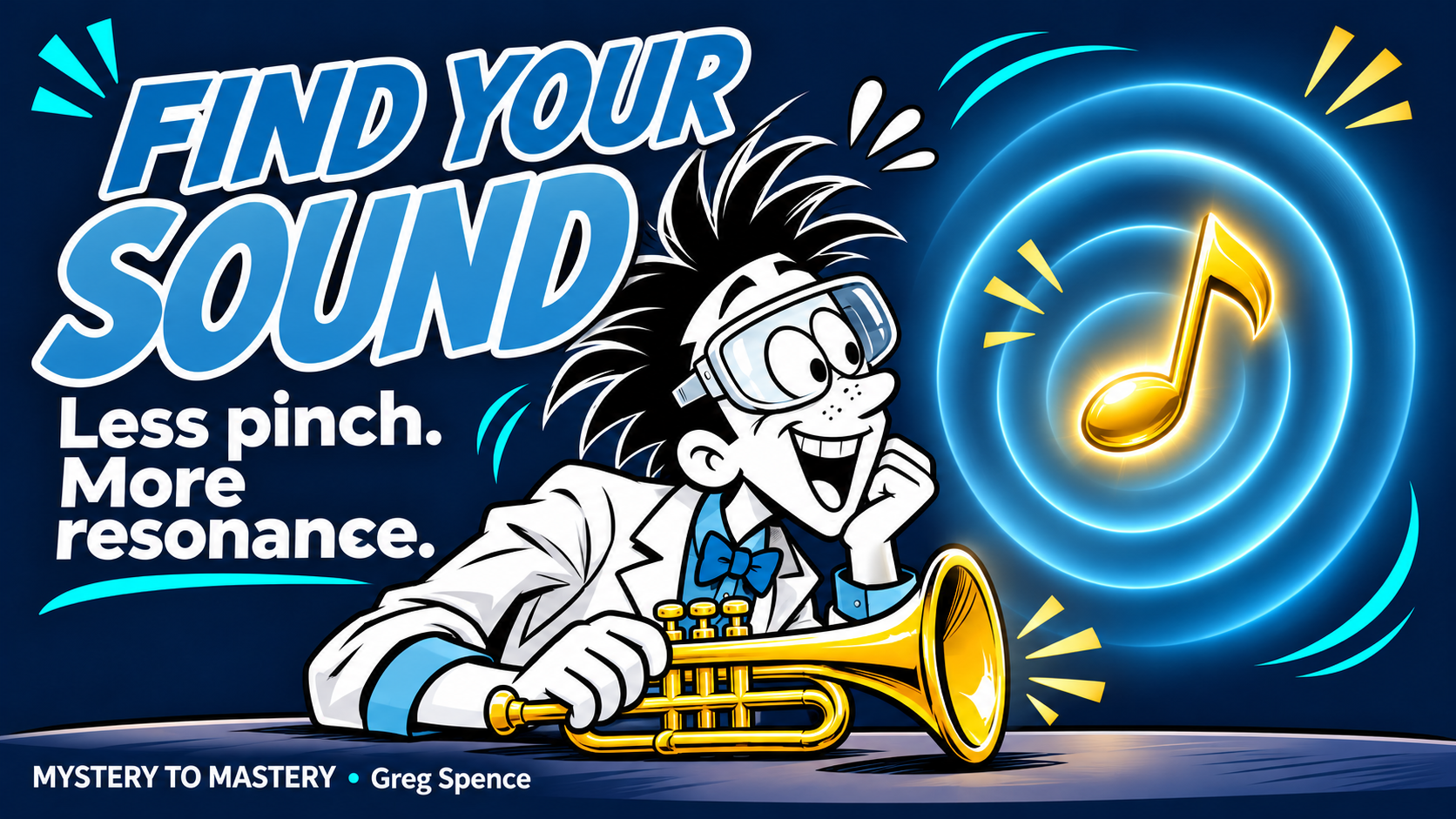
How To Improve My Sound On The Trumpet
Want a clearer, more resonant trumpet sound? In Beginner Lesson 3, Greg Spence introduces sound development through freer lip response, less pinching and less unnecessary effort.
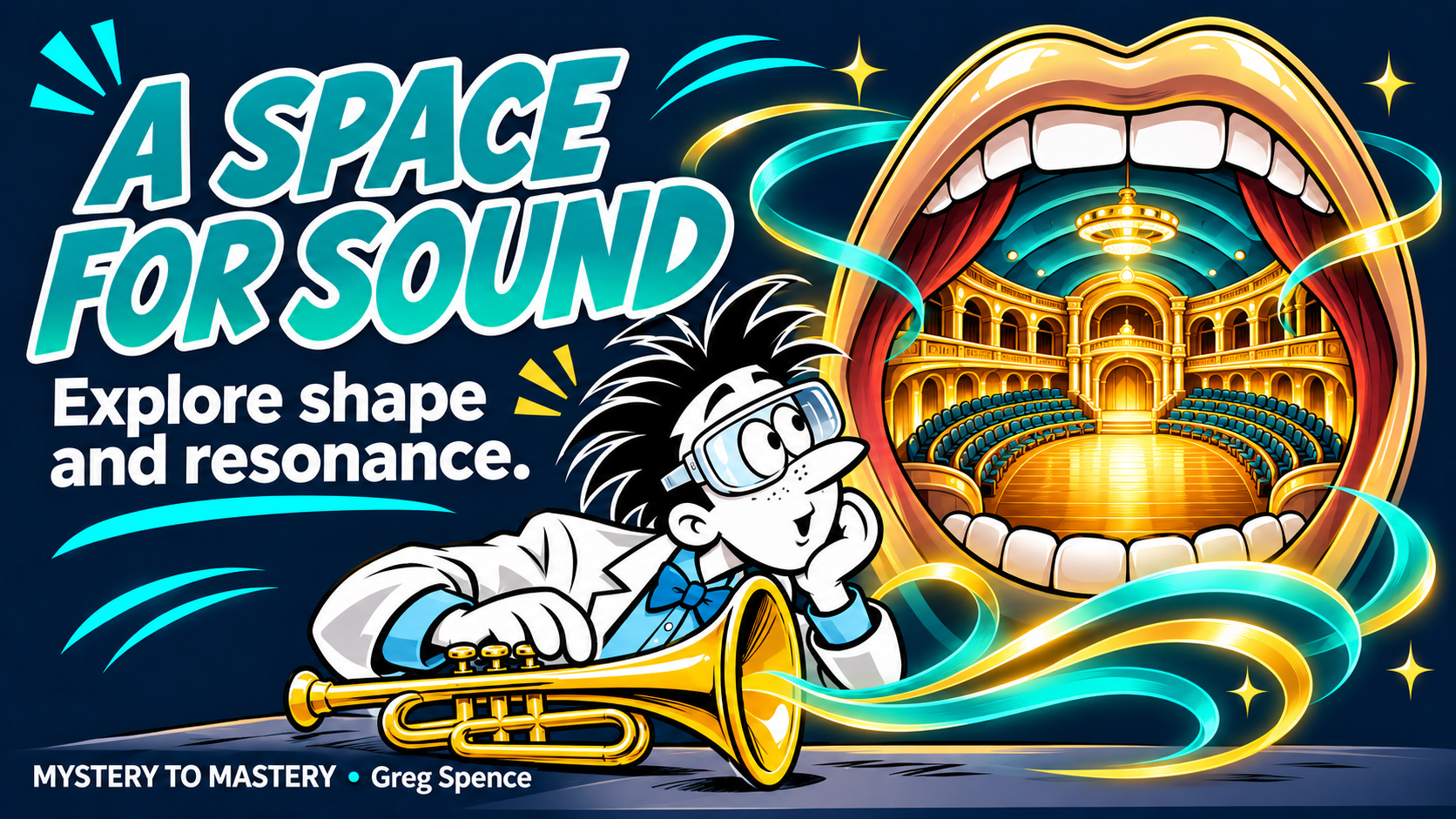
Oral Cavity Resonance: What It’s All About on Trumpet
How does the feeling of shape inside the mouth relate to trumpet sound? In this extended archive lesson, Greg Spence explores his oral cavity resonance concept alongside tongue position, jaw coordination and aperture corners.
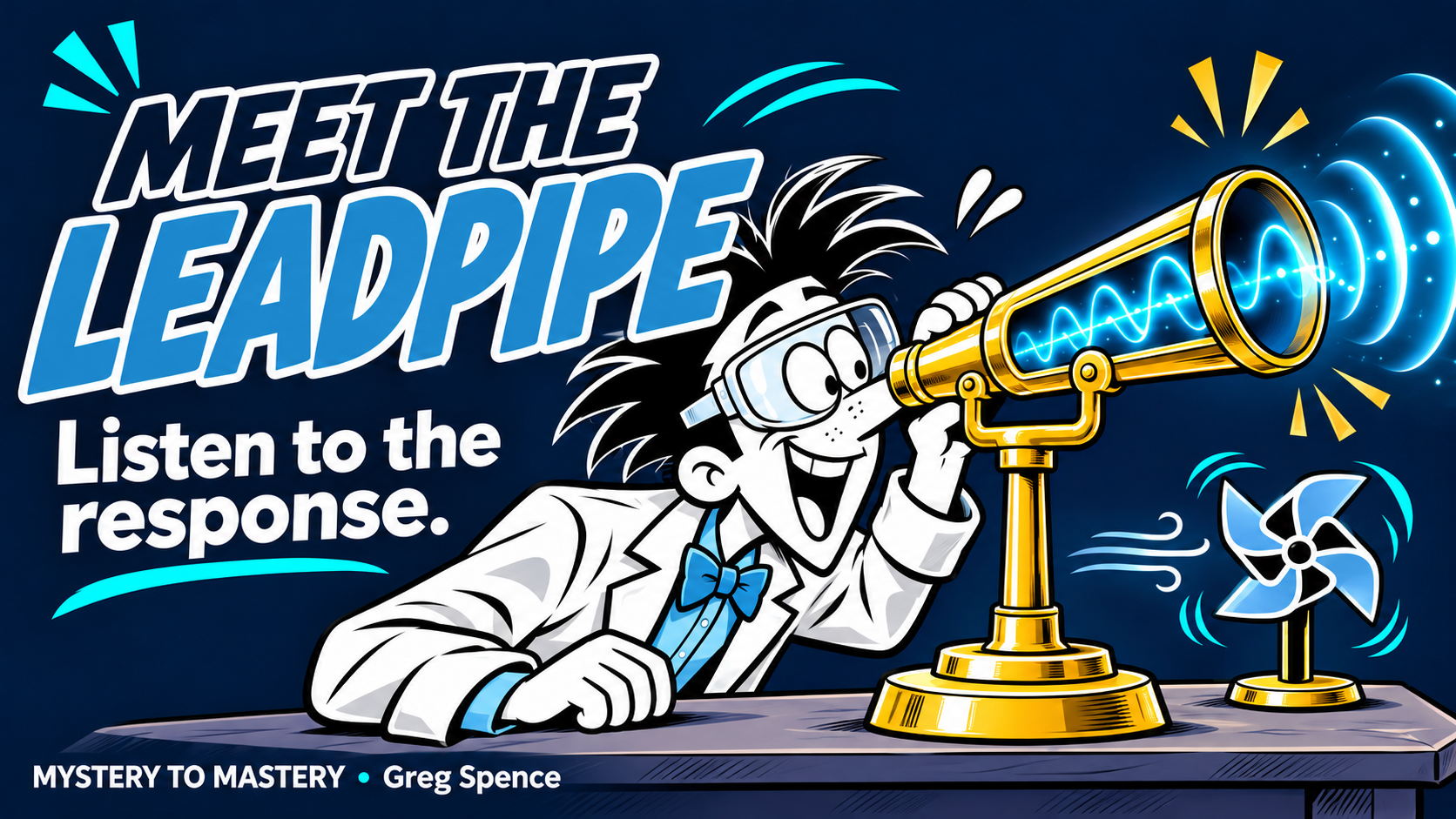
Playing the Trumpet Leadpipe
What can playing the trumpet leadpipe reveal about your sound? In this early Mystery to Mastery lesson, Greg Spence demonstrates the transition from air release and visualiser to mouthpiece and leadpipe.
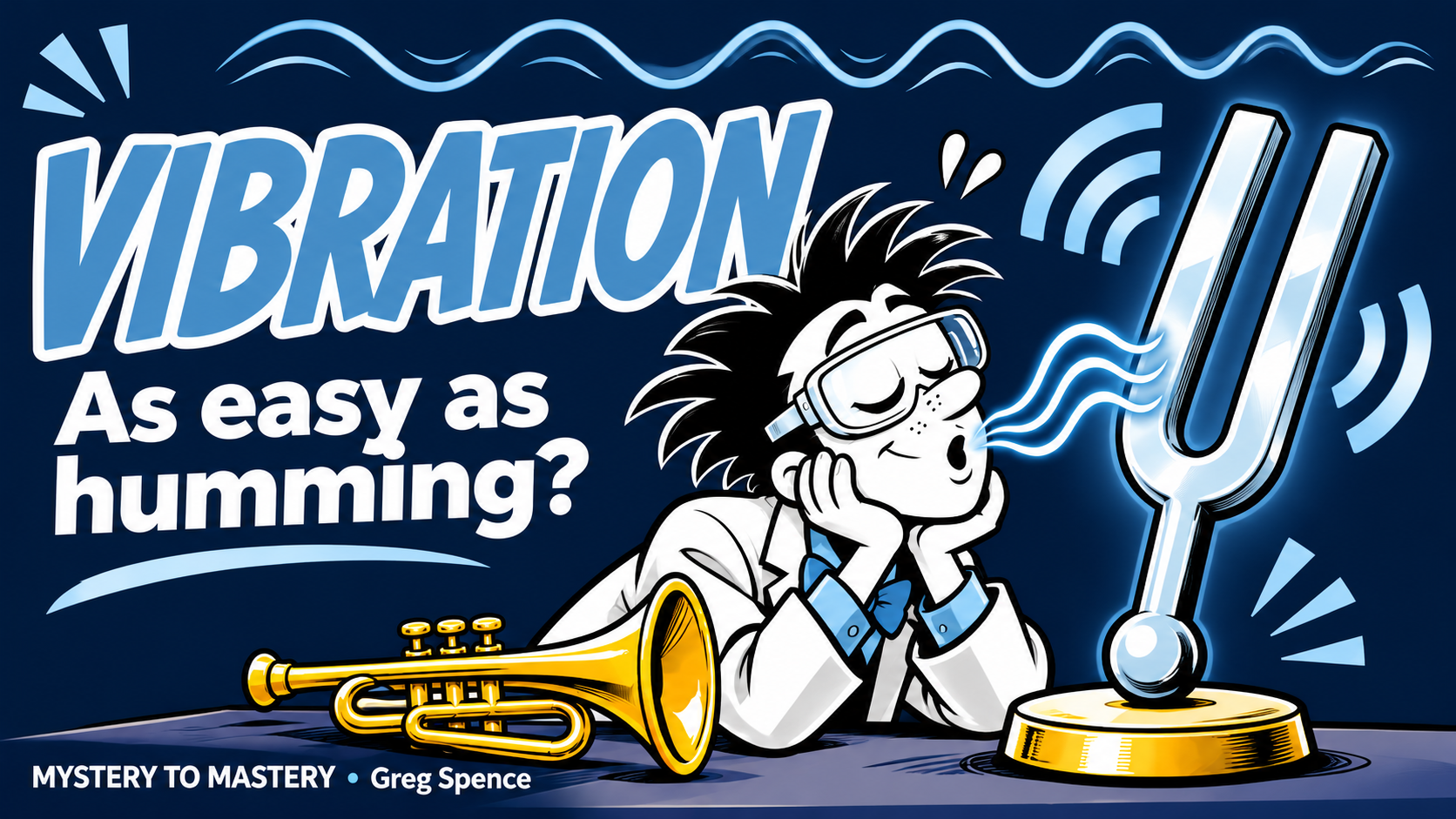
Brass Playing and Humming: A Short Introduction to Easier Sound
In this short introduction, Greg Spence compares the interaction of lips and air with the ease of humming, talking and singing.
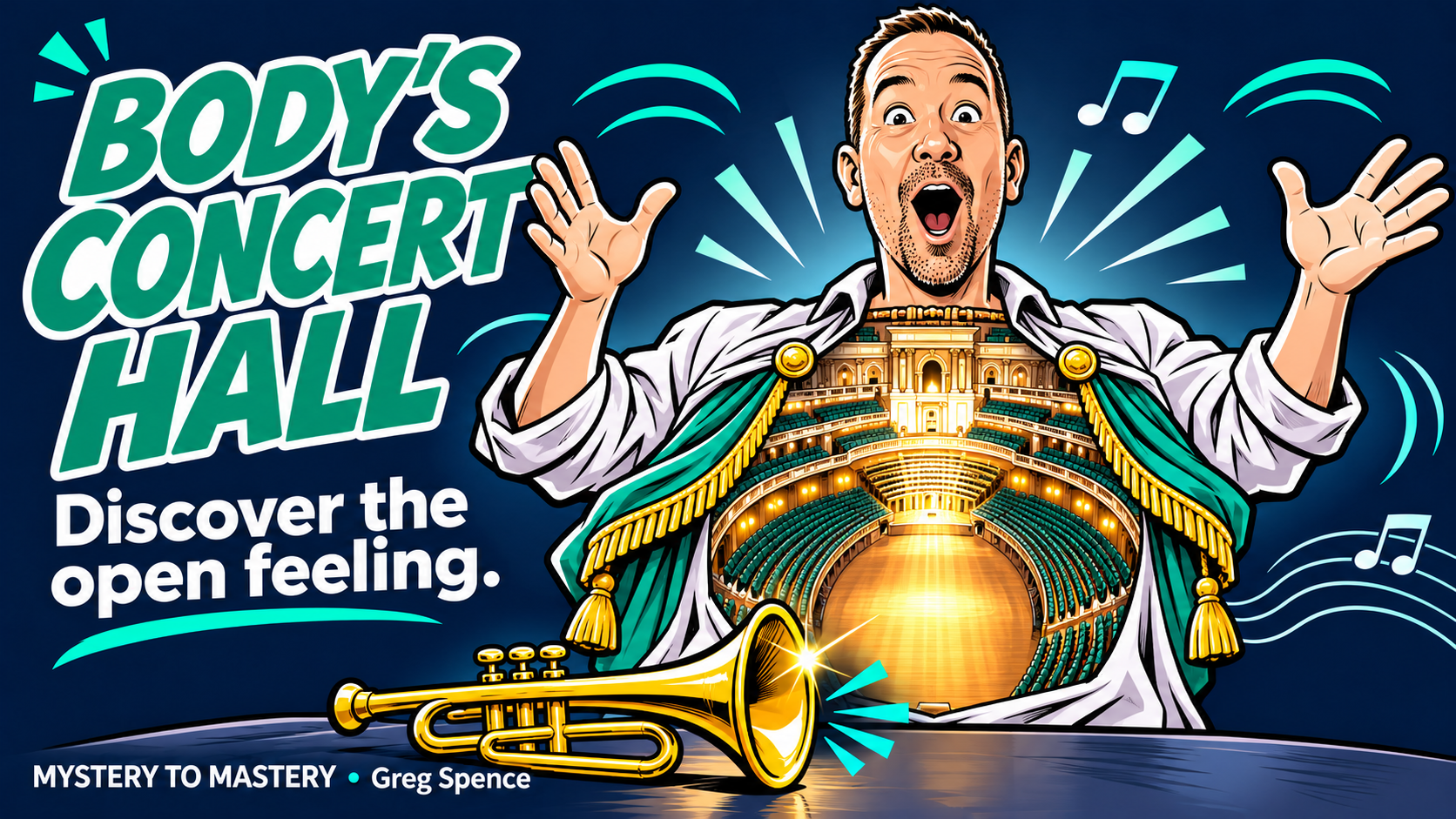
The Body’s Concert Hall: An Efficient Trumpet Playing Demonstration
This archive video combines playing demonstrations with Greg Spence’s Body’s Concert Hall analogy. The transcript captures the spoken explanation; watch the video to hear the musical examples.
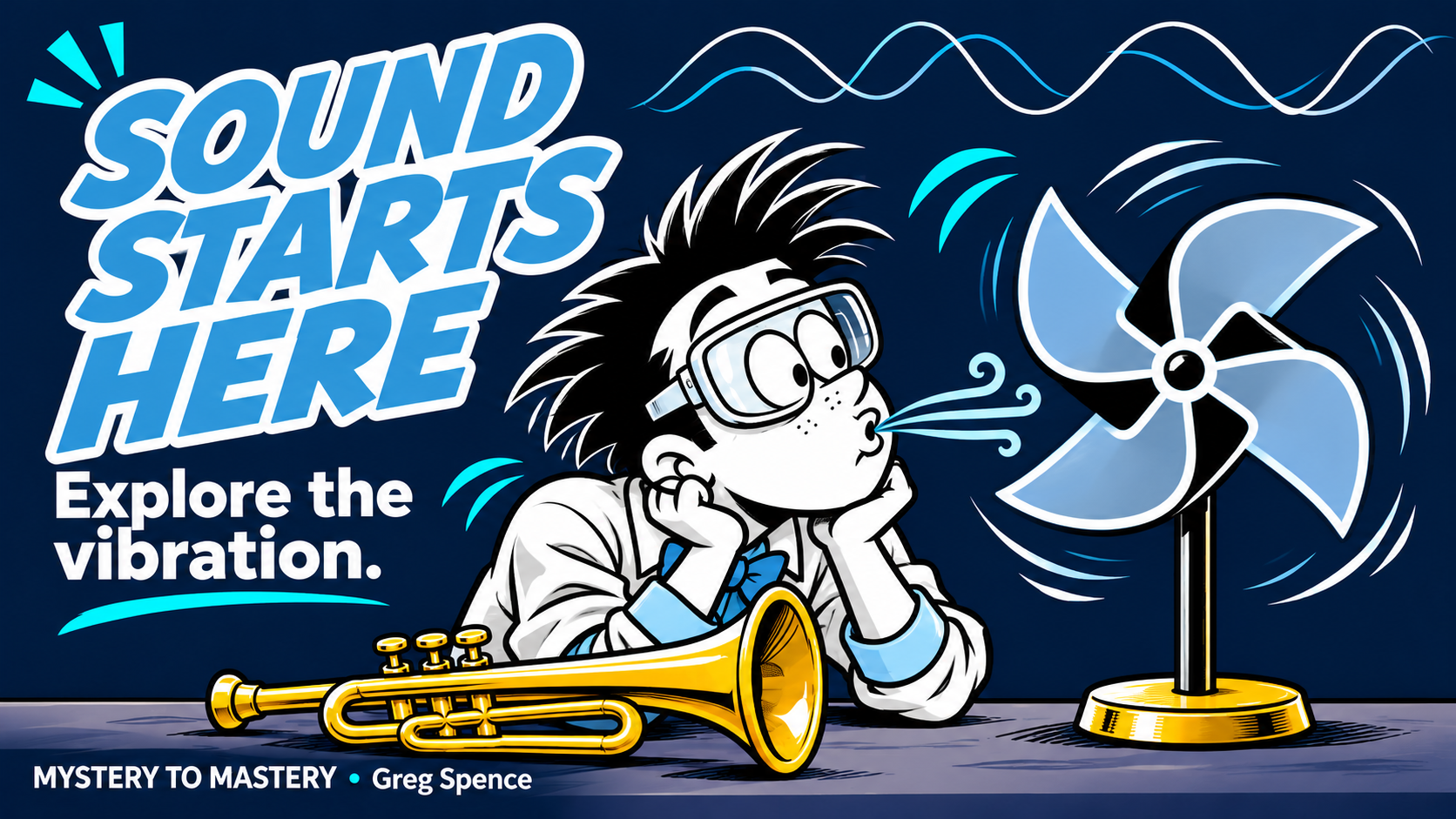
Trumpet Sound Production: A Short Vibration Demonstration
In this short archive demonstration, Greg Spence uses a visualiser, mouthpiece, leadpipe and straw to explore vibration. Watch the physical demonstrations alongside the transcript, which cannot capture the musical sounds.
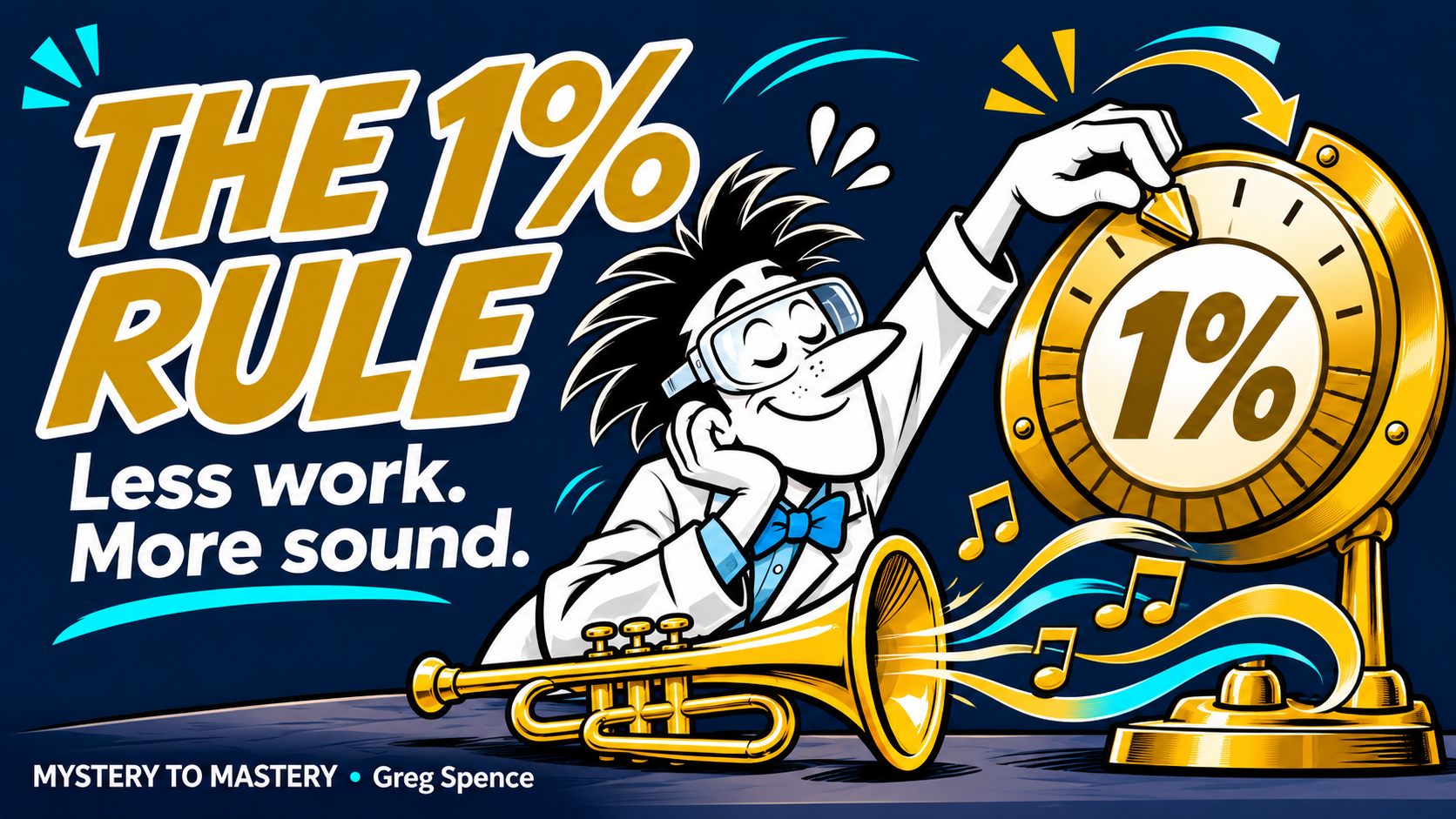
The 1% Rule: More Trumpet Sound With Less Effort
Greg Spence introduces the 1% Rule: ask whether you can get more sound while doing a little less. He compares the instinct to force a trumpet sound with the way we respond to tension in the voice.
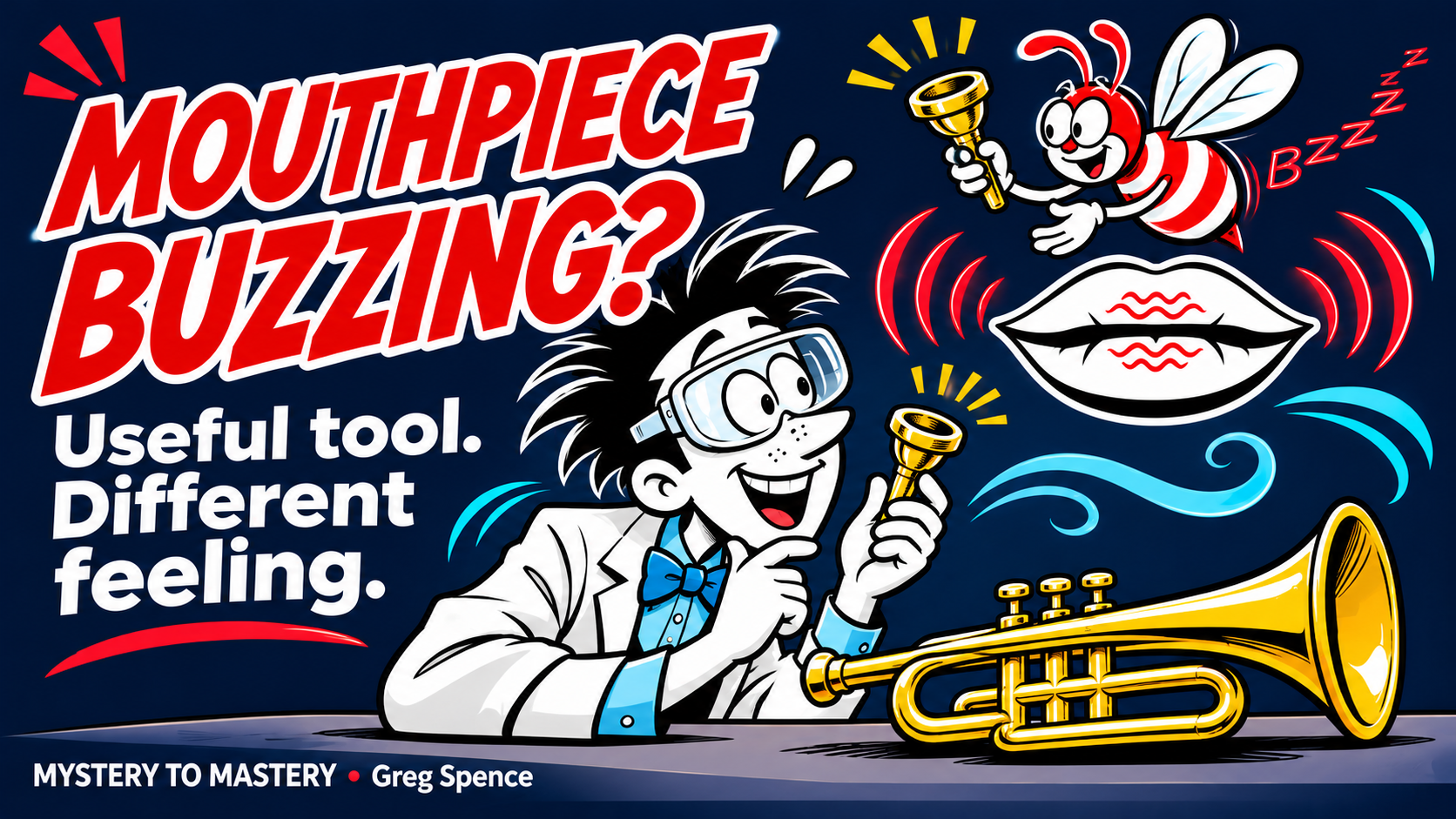
Mouthpiece Buzzing: Benefits, Risks and Sound Production
Greg Spence discusses mouthpiece buzzing as a warm up, musical tool and source of possible unnecessary effort. He demonstrates the contrast between forcing a buzz and the sympathetic oscillation he teaches.
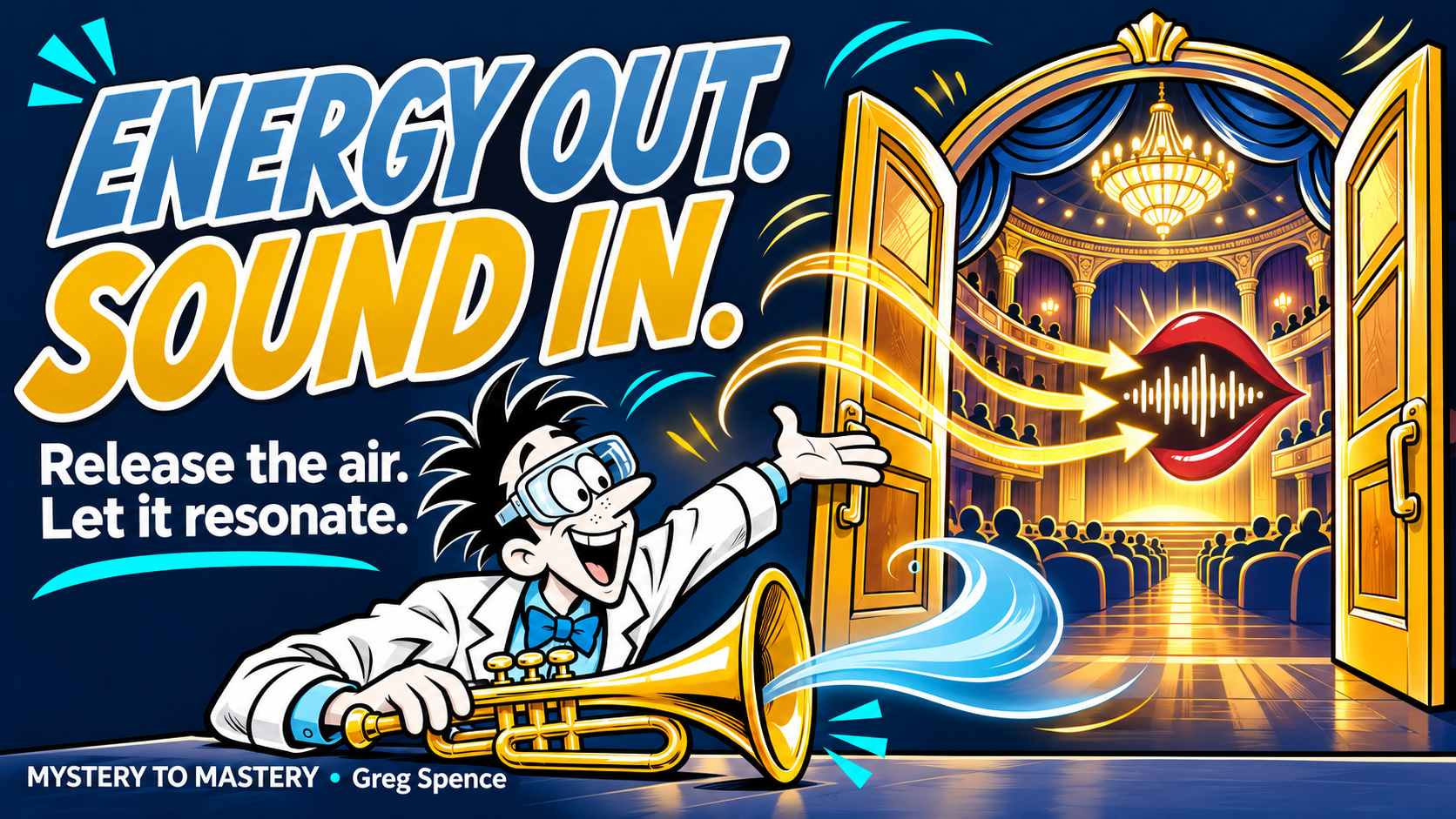
Trumpet Sound Production: Release the Air Without Overblowing
Greg Spence introduces the Body’s Concert Hall concept and explores the feeling of releasing air without unnecessary pushing. This lesson connects sound production, preparation and the recognition of overblowing.

Improve Your Trumpet Tone: Think Beyond Stronger Lips
Greg Spence explores trumpet tone through breath energy, resonance, lip coordination and the feeling of efficient playing, with humming and trumpet demonstrations.