
Free Trumpet Lessons & Video Library

Explore free trumpet lessons with Greg Spence, founder of Mystery to Mastery and WindWorks Trumpet Academy. Discover practical explanations and demonstrations covering sound, range, endurance, efficient playing and the learning process. Use the topic filters below to find trumpet lessons for your current goal, whether you are working on breathing, tone, range or practice efficiency. New players can start with the Getting Started category for beginning trumpet lessons; experienced players can explore lessons on endurance, articulation and performance confidence.

New to WindWorks? Start here.
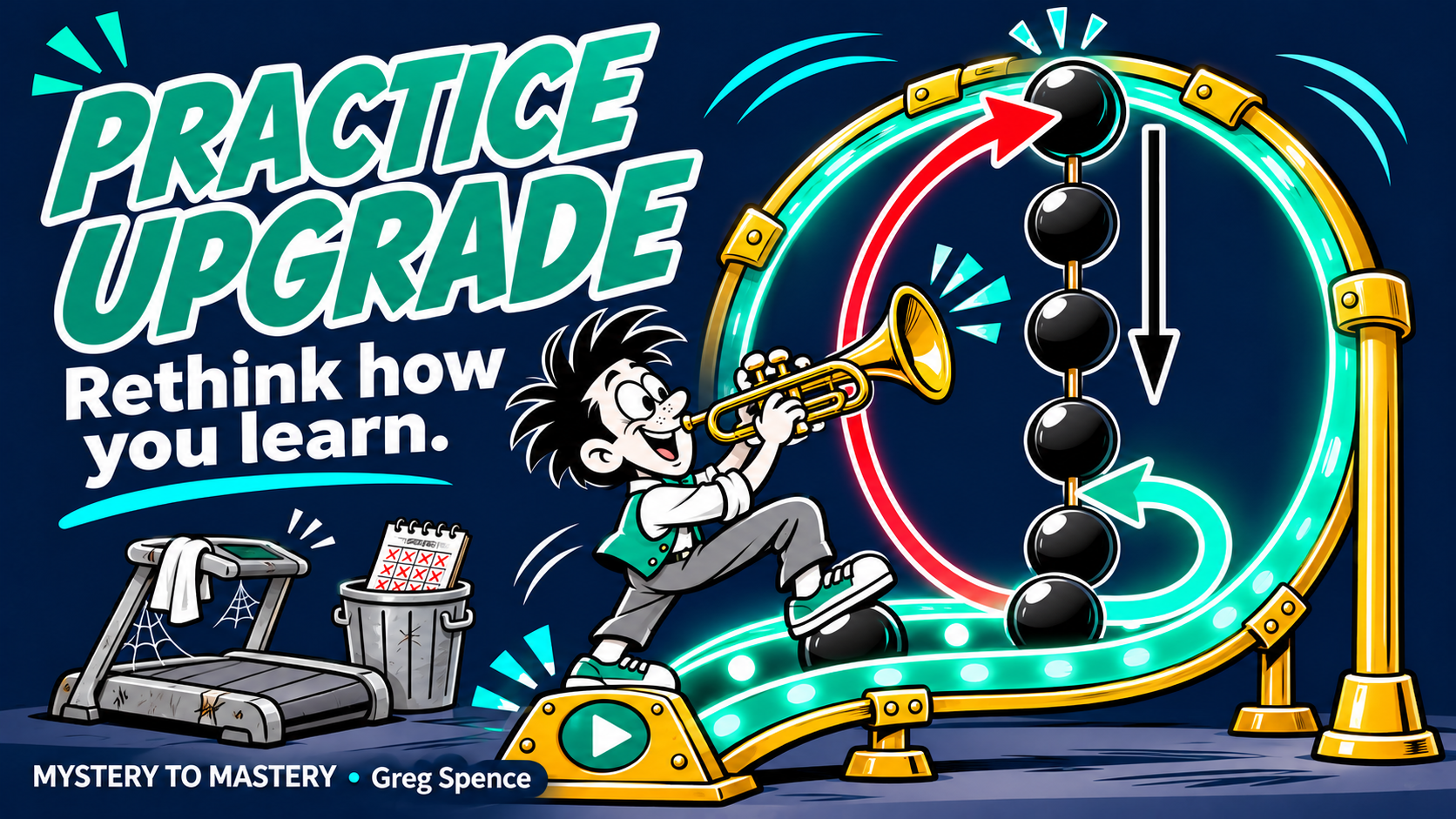
Free trumpet lessons video library: WindWorks Learning Loop feature

PRACTICE & LEARNING · 5 MINUTES

Why Your Trumpet Practice Is Outdated

Explore playing efficiency, familiar habits and a different approach to learning with Greg Spence, alongside footage from Eastman ITG 2026.

Watch the lesson →

For more free trumpet lessons, visit the Mystery to Mastery YouTube channel for additional playing demonstrations and explanations.

How to use these free trumpet lessons

Use the search or topic buttons to find free trumpet lessons on breathing, range, sound, endurance, articulation and practice. Start with a goal that matters to your playing today.

If you are not sure where to begin, choose one of these free trumpet lessons, watch the demonstration, and note one idea to try before moving to the next video. These free trumpet lessons are short introductions; WindWorks offers a guided path through the ideas with 7-day free lesson access.

If a search returns nothing, broaden your term to a topic such as breathing, tone or range. The video library grows as new free trumpet lessons are added.
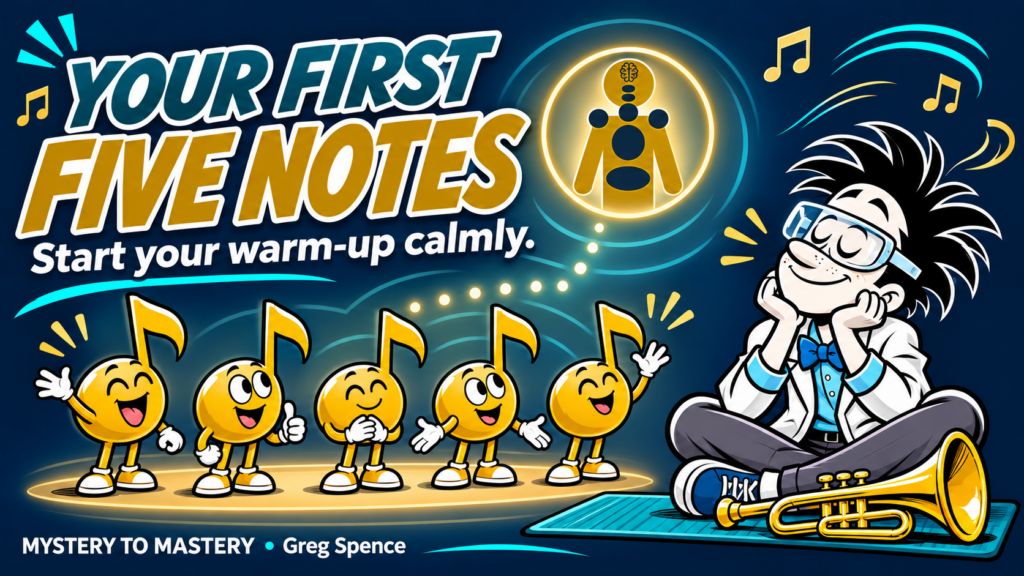

Greg Spence introduces the first five trumpet notes in this archive beginner lesson. The discussion covers warming up and muscle preparation, with examples using different trumpets.
Starting trumpet? In Beginner Lesson 2, Greg Spence introduces breath preparation, lip response and producing an early sound without unnecessary tightening.
What does “aperture corner tension” mean, and how is it different from pinching the middle of the lips? Greg Spence responds to WindWorks forum questions about aperture corners, jaw position and playing higher on trumpet.
Why practise on a leadpipe instead of the complete trumpet? Greg Spence introduces the Mystery to Mastery WindPipe and explains how he uses it to explore new playing sensations away from familiar instrument habits.
Want a clearer, more resonant trumpet sound? In Beginner Lesson 3, Greg Spence introduces sound development through freer lip response, less pinching and less unnecessary effort.
How does the feeling of shape inside the mouth relate to trumpet sound? In this extended archive lesson, Greg Spence explores his oral cavity resonance concept alongside tongue position, jaw coordination and aperture corners.
What can playing the trumpet leadpipe reveal about your sound? In this early Mystery to Mastery lesson, Greg Spence demonstrates the transition from air release and visualiser to mouthpiece and leadpipe.
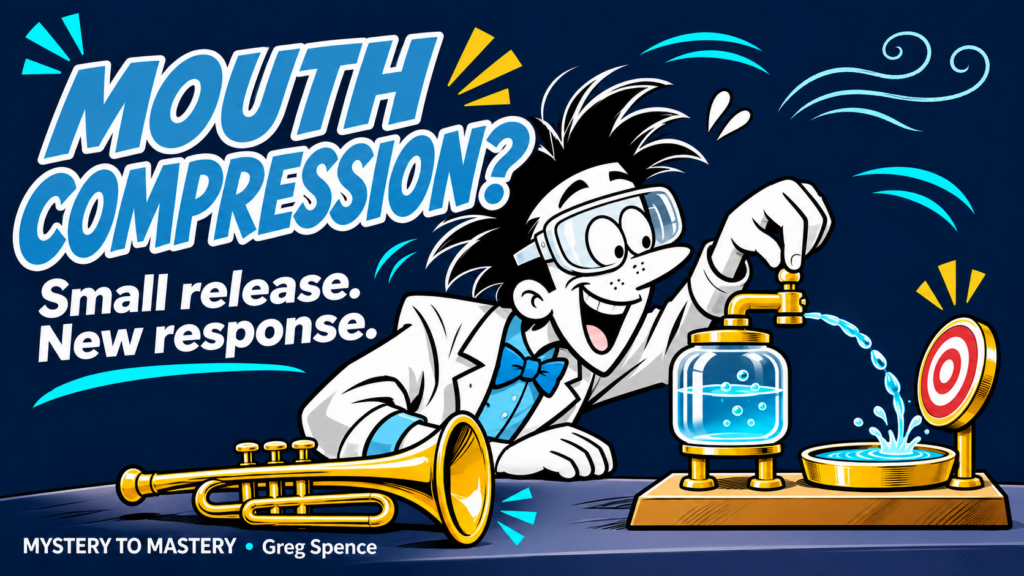
What does Greg Spence mean by mouth compression in trumpet playing? This archive lesson explores the difference between releasing a small amount of energy and pushing harder with the whole body.
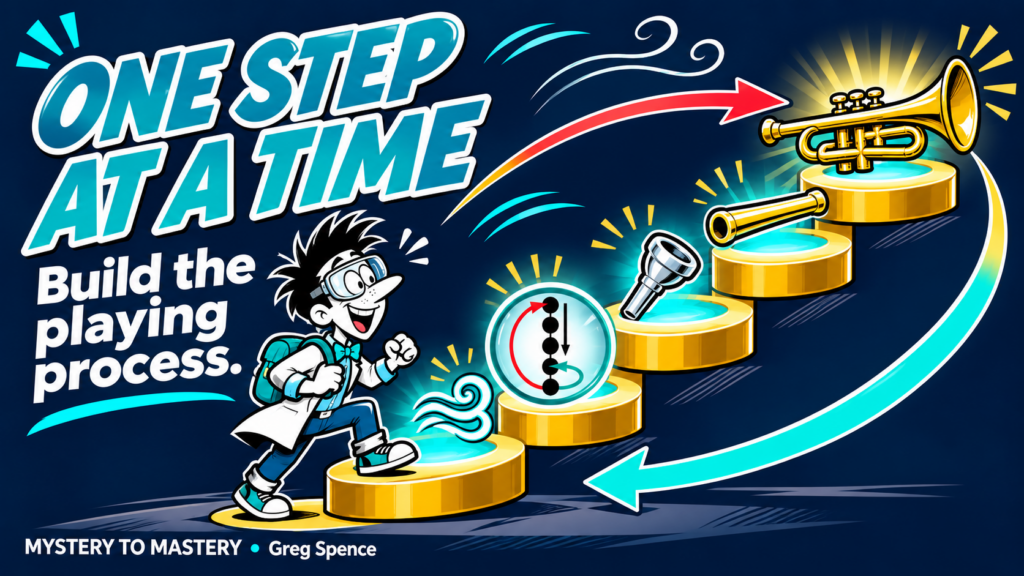
How does Greg Spence build a trumpet technical practice session? This quick response to a viewer request runs through his preparation sequence: breath release, lip shape, visualiser, mouthpiece, leadpipe, tonguing and flexibility.
How do you double tongue on trumpet? Greg Spence introduces the “T” and “K” actions, explains his own approach to air release, and demonstrates how to begin practising away from the instrument.
How do you change pitch on the trumpet without simply pushing harder? In this early Mystery to Mastery lesson, Greg Spence introduces his concept of SHAPE and the sensation of changing aperture corners.
What size trumpet mouthpiece should you use? Greg Spence compares mouthpieces from his own playing experience and discusses sound, comfort, musical setting and consistency.