
Free Trumpet Lessons & Video Library

Explore free trumpet lessons with Greg Spence, founder of Mystery to Mastery and WindWorks Trumpet Academy. Discover practical explanations and demonstrations covering sound, range, endurance, efficient playing and the learning process. Use the topic filters below to find trumpet lessons for your current goal, whether you are working on breathing, tone, range or practice efficiency. New players can start with the Getting Started category for beginning trumpet lessons; experienced players can explore lessons on endurance, articulation and performance confidence.

New to WindWorks? Start here.
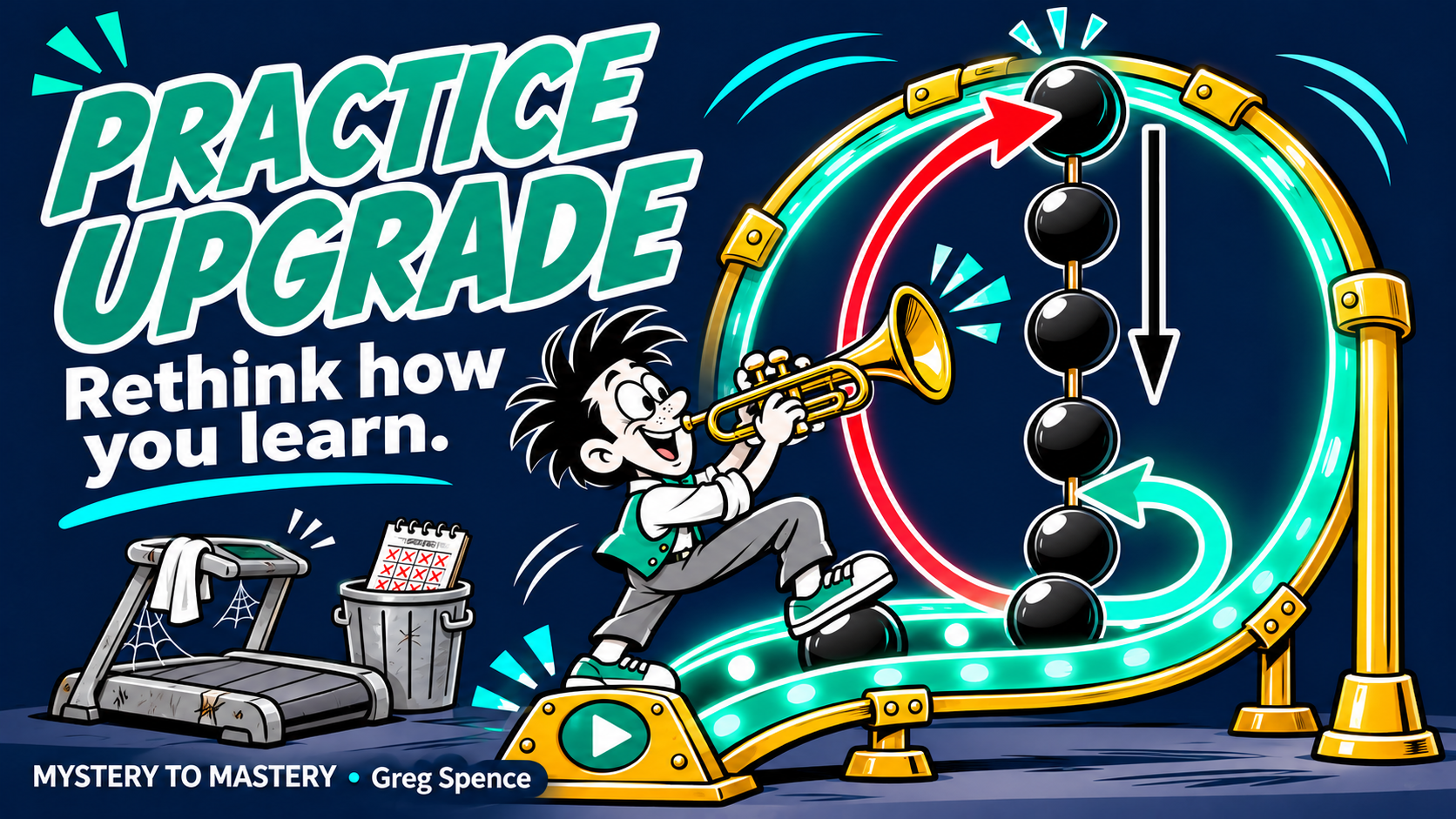
Free trumpet lessons video library: WindWorks Learning Loop feature

PRACTICE & LEARNING · 5 MINUTES

Why Your Trumpet Practice Is Outdated

Explore playing efficiency, familiar habits and a different approach to learning with Greg Spence, alongside footage from Eastman ITG 2026.

Watch the lesson →

For more free trumpet lessons, visit the Mystery to Mastery YouTube channel for additional playing demonstrations and explanations.

How to use these free trumpet lessons

Use the search or topic buttons to find free trumpet lessons on breathing, range, sound, endurance, articulation and practice. Start with a goal that matters to your playing today.

If you are not sure where to begin, choose one of these free trumpet lessons, watch the demonstration, and note one idea to try before moving to the next video. These free trumpet lessons are short introductions; WindWorks offers a guided path through the ideas with 7-day free lesson access.

If a search returns nothing, broaden your term to a topic such as breathing, tone or range. The video library grows as new free trumpet lessons are added.
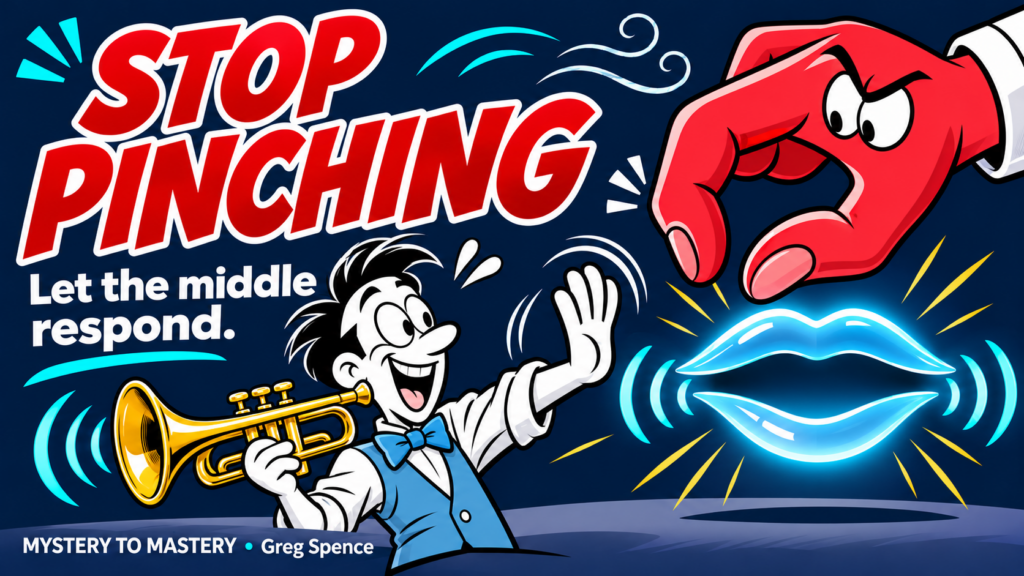
Greg Spence demonstrates the contrast between clamping the lips down and drawing the aperture corners inward. This short lesson focuses on recognising the feeling of the movement.
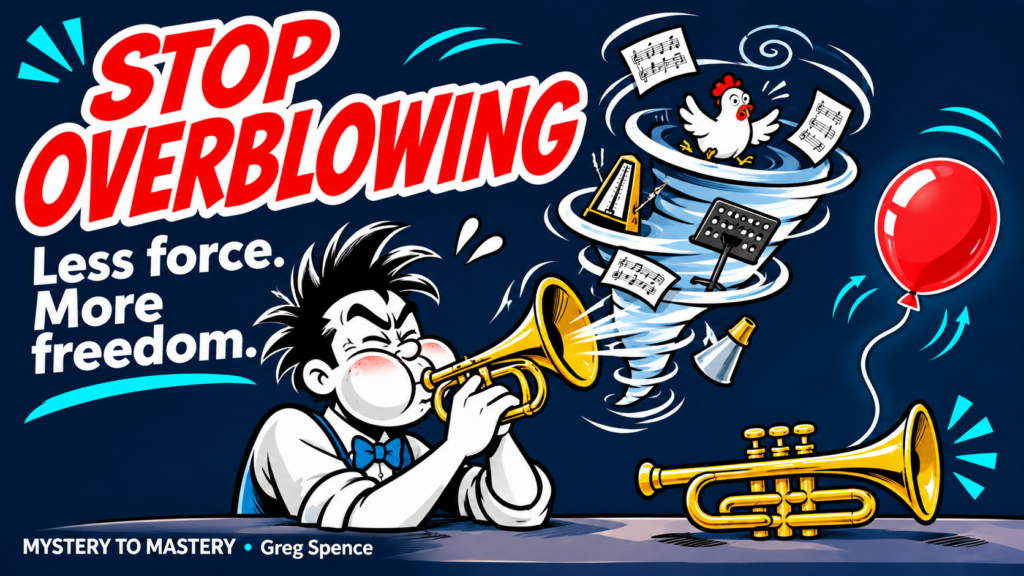
Greg Spence contrasts actively squeezing the air out with allowing a passive release. This short archive lesson uses a balloon, humming and lip movement to explore the feeling of overblowing.
Greg Spence demonstrates four linked steps: breath and humming, opening, aperture corners and airflow. This short archive lesson focuses on the sensation of an open, efficient setup.
In this short archive demonstration, Greg Spence uses a visualiser, mouthpiece, leadpipe and straw to explore vibration. Watch the physical demonstrations alongside the transcript, which cannot capture the musical sounds.
Greg Spence takes the conversation onto the golf course with Cassie Porter and Dan Morrison. This archive interview explores professional mindset and the learning ideas Greg connects with music and performance.
Greg Spence and Mark Bain conclude their conversation about practice and performance. Part 3 continues the discussion of pressure, familiar playing sensations and learning through experience.
In Part 2, Greg Spence and Mark Bain continue their conversation about preparation and performance. They discuss certainty, the playing process and Greg’s experience of performing under pressure.
Greg Spence and Mark Bain discuss the psychology and process of practice and performance. This first conversation explores learning, mistakes and preparing a clear idea of what you want to achieve.
Greg Spence discusses three practice ideas: trust the process, treat errors as information and take responsibility for your learning. The lesson includes a no notes demonstration and attention to the feeling of playing.
This WindWorks session explores articulation and the coordination of the aperture corners. Greg Spence discusses different attacks and the importance of checking how a drill is being performed.
In this lesson excerpt, Greg Spence works with a player on the Milk Spout, aperture corners and the feeling of the airflow. The discussion shows how an individual adjustment can change the playing sensation.
Greg Spence asks what needs to change when practice keeps producing the same limitations. In this extended discussion, he examines the difference between reading instructions and experiencing an efficient process.