Explore process-focused trumpet practice with Greg Spence. Notice how you play, recognise errors and use No-Notes work before adding sound.
Read the video transcript
Source: YouTube captions, formatted for reading. Captions may contain errors; refer to the video for precise wording, sounds and demonstrations. Dates and offers reflect the original recording.
hi today I’d like to talk to you about results driven playing versus process-driven learning so if you’re playing your instrument the way that you want you’re getting the results that you want well you probably wouldn’t be watching this but if you’re not being able to attain your dream Avatar the dream of what you want to play like and getting the gigs that you want being on the stages that you want to get to what are your obstructions so if we keep doing results driven practice without looking under the Bonnet without looking under the hood and
the mechanics of how we’re playing you may find an error here and there and be able to fix it but more often than not these errors go undetected for years and years and years and like the highest percentage of players the majority of players don’t get to where they want to get to they never discover their dream Avatar and there’s a real reason for this and it doesn’t have to be the case so we need to understand with our pschology how the system works and then we by using feelings the feeling of playing that’s the
way we detect errors and correct them by the sensation of what we’re doing and we use the feeling of these errors to change the way that Brian the brain here we need to change the way that he thinks about it so he sends different messages to the muscles in order to get different results to get better results so process driven is getting under the Bonnet getting under the hood and going right how does this system work where am I errors so by little bit by little bit we have to break down the machine and be
aware of the processes that are at play when we’re playing now when we go to find an error that means a change of process now if your intention is to play a note we’re looking at the ink we’re trying to play a note Brian the brain is going to rely on what he knows now so if your intention is to play the ink Player Note you won’t change the brain when you understand the processes and the feeling of what you’re trying to achieve the note might not come out that’s fine we play no notes to
train the body the feeling of what we want then over time we add sound and we add the ink we add the notes and we play the notes in a more efficient way because we’re refining our processes now of course there’s ink itis we look at the ink and it just triggers all of the bad habits that we’ve got so that takes closed eyes repetition just do this just do this the feeling of the new process and we develop it and we build confidence and eventually that becomes your new automatic process so when you are
results driven playing the ink playing the music on your dream stage you don’t have to think about the techniques because Brian’s been trained what to do but in the meantime we need to keep looking through the system finding out the processes that make playing work refine the processes eliminate the errors and slowly embed them so we do them automatically process driven practice is massively important results driven is forget about the process and just go out and play and have fun and you will recognize that your results driven playing will improve out of sight when you
improve your processes it’s really important that you look under the Bonnet when you’re having problems with your playing we offer a 7-Day free trial please come along and check it out you might not stay that’s fine at least you’ve had a look I’m not asking you to get involved in something that you know nothing about but I’m here to help I’ve been doing this for many many years and when you find the errors in your playing and get rid of them you will not believe how amazing playing can be so come along uh join up
for the the seven days and I hope to change your playing life very very soon can’t wait to see you in the [Music] [Applause] [Music] course [Music]
Process-focused trumpet practice: what should you observe?
Process-focused practice means examining how you play, noticing errors through sensation and repeating a clearer action. Greg describes using no-notes work before adding sound and written music, so the new process has time to become familiar.
This recording is part of Greg Spence’s public teaching archive. References to dates, events and offers reflect the original recording.
Continue exploring
Browse all free trumpet lessons or explore the WindWorks Learning Loop.
Watch the original lesson on YouTube.

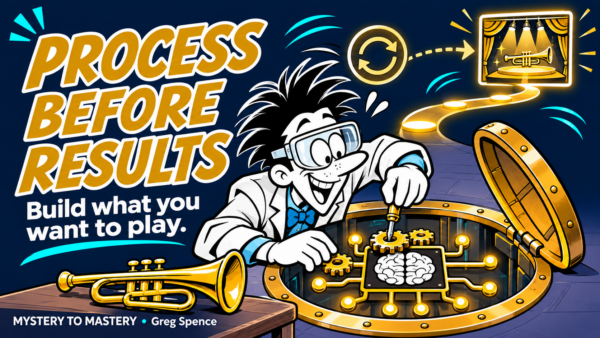 Process Versus Results: Build Better Trumpet Playing Habits
 Practise No-Notes: Notice Unnecessary Effort Before Adding Sound
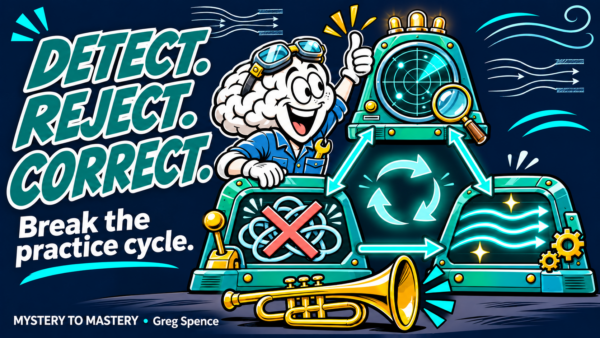 Trumpet Practice Not Improving? Detect, Reject and Correct Your Errors