Discover stillness in WindWorks with Greg Spence. Begin from a quiet baseline and observe what changes as you add movement, breath and trumpet sound.
Read the video transcript
Source: YouTube automatic captions, formatted for reading. Captions may contain errors; refer to the video for precise wording, sounds and demonstrations. Dates and offers reflect the original recording.
the best brass plays in the world have mastered the art of efficiency in this video I’m going to reveal how to let go of any involuntary or unnecessary muscle activations to get better playing results faster congratulations I’m wanting to take the short cut to easier brass playing so what makes our approach so different and so powerful is not only do we teach you the feeling of how to play it the highest level with ease and the mechanics how the body and the instrument system works but
we give you the ability to self diagnose what you’re doing right and what you’re not doing right we call it error detection error rejection error correction the error Trilogy now in order to be able to self- diagnose uh your good parts of your playing and the errors that you’re making we start off in Stillness now we have a mantra that says let’s not use what we don’t need until we do need it we don’t want any involuntary or unnecessary muscle activation going on in the body
we don’t want any confusion doubt or fear in the brain so when we have confidence and belief we know exactly what we’re working on and we know that the body’s capable of doing everything that we need to play at the top level then we’ve got all the tools to start to self- diagnose find out what you’re doing so we start that diagnosis with Stillness which means we’ve got nothing happening in the body whatsoever the the eyes are closed think about this if you wanted to focus
really clearly on some music you would close your eyes and listen to what’s going on because we’re doing a feeling based exercise like playing the instrument we learn by the feeling we have to close the eyes 100% focus on the feeling so we sit in Stillness we let go of everything besides falling off the chair here the shoulders are relaxed the head’s relaxed nice and balanced on top of the head and with got a calm mind no doubt no fear no confusion we’ve got belief We’ve
Got Confidence it’s exciting so the brain’s in the learning State it’s happy the body’s not having any involuntary or unnecessary muscle activation that is stillness now Stillness can be playing a three octave arpeggio if there’s no involuntary or unnecessary muscle activation Stillness can be playing any of your favorite music with efficiency we’re not using what we don’t need until you do need it that’s the whole essence of Stillness close your eyes 100% focus is the Mind calm is the body relaxed that’s the new and exciting
and Powerful approach to starting to update and reprogram that stubborn 1.0 brain and start and develop that Foundation that is solid that we can build amazing playing all over the instrument so let’s start with Stillness and take your playing to a higher level click this next video right here and make sure you come and check out mrom mastery.com it is a common belief that there is no shortcut to becoming a great brass player and whilst it does take some work there is absolutely a shortcut and
in this video I’m going to explain exactly what the short cut to better brass playing is welcome to the new world of brass playing come and join us you will feel the difference
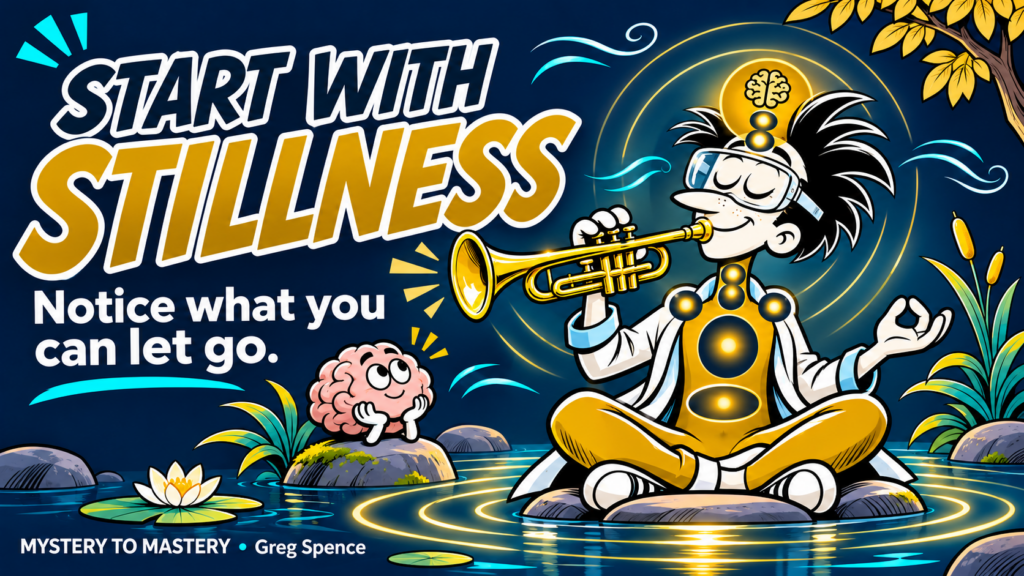
What does stillness mean in trumpet practice?
Greg defines stillness through the absence of involuntary or unnecessary activation. Starting from a quiet, relaxed baseline helps players observe what changes as they add movement, breath and sound.
This recording is part of Greg Spence’s public teaching archive. References to dates, events and offers reflect the original recording.
3 checks for exploring stillness
- Is your mind calm and clear about the task? Greg begins with confidence in what you are exploring, with attention available for the feeling of the movement.
- What is happening in your body before you play? Notice your head, shoulders and balance. Begin with a quiet baseline, then observe what changes as you add breath or instrument movement.
- Can that awareness continue while you play? Stillness does not mean freezing in place. Greg explains that it can be present in an arpeggio or a piece of music when you use what the task needs and notice any extra activation.
Continue exploring
Where would you like to explore next?
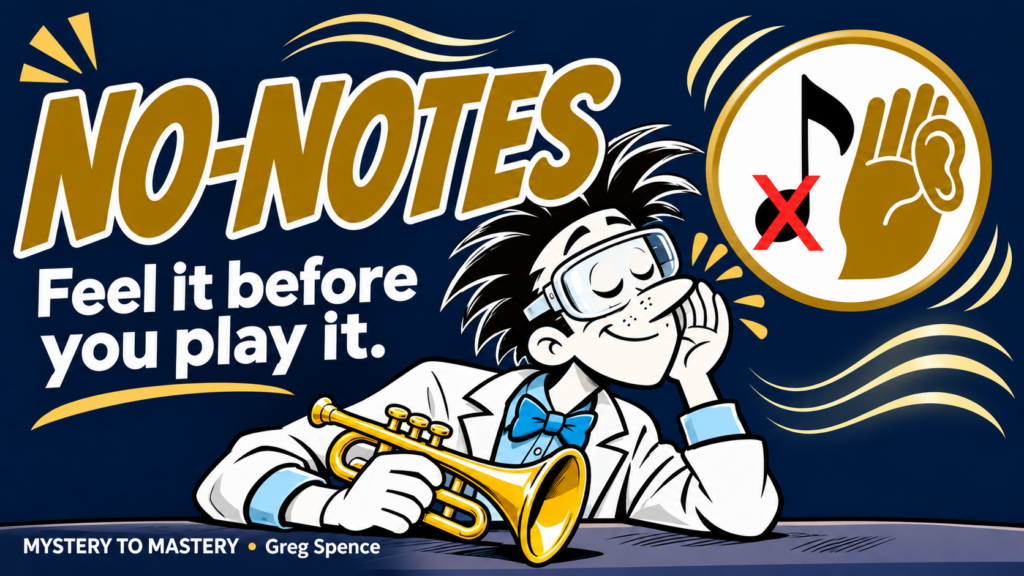 Practise No-Notes
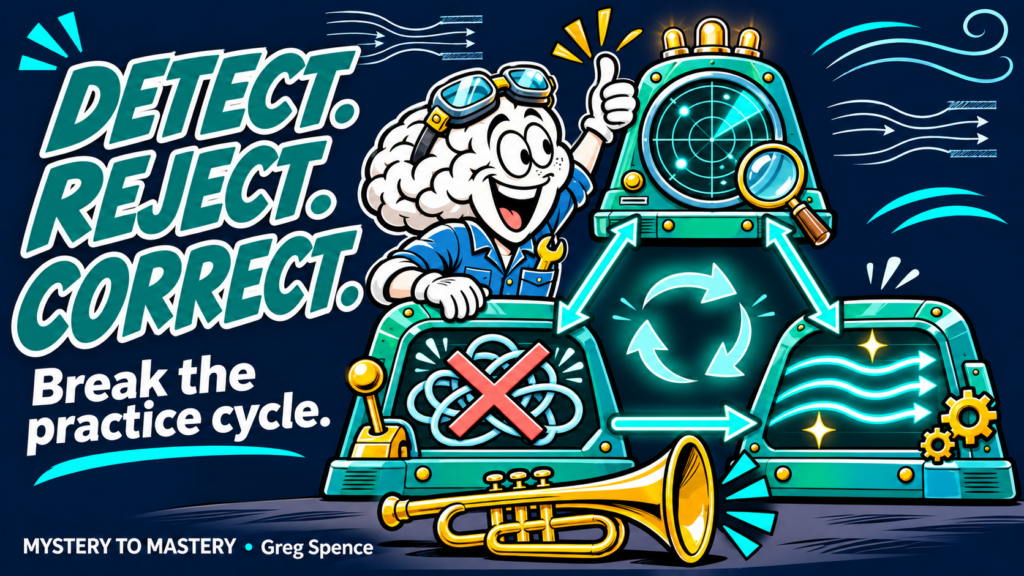 Detect, Reject and Correct
 Build a Solid Foundation
Browse all free trumpet lessons or explore the WindWorks Learning Loop.